Chapter 2 Response

This chapter seemed to further delve into the world of installation art and its many different forms. More specifically, the author talks a lot about the most important characteristics of Installation art and what distinguishes it from other forms. I really liked the idea that installation art should be interactive and that an interaction is really based on one’s environment and the person viewing it. It makes it unique and allows for everyone to have a different experience when viewing. I also thought the idea of space was really interesting. It was mentioned many times throughout the chapter along with the relationship to Minimalistic art. How much space that is between a viewer and the art being shown can really effect how someone perceives something.

The idea of size of an art implementation was cool too. How it can either engulf a viewer or make them feel more private and intimate. Overall, a decent chapter and it definitely helped me gain a better grasp on what Installation art has to offer.

Project 1 Update (Process 1)

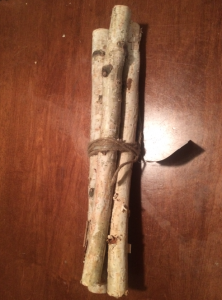
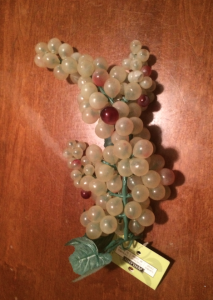
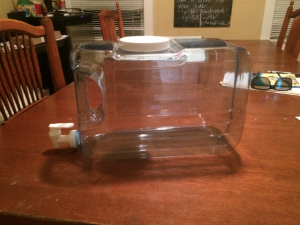
For this first update, I thought that I would mention some key things as I move forward. I have decided to change the concept of it just a tad. Instead of boxes with items inside them, I thought might as well just project on to the objects themselves. I am still going with the idea of taking our prime essentials for granted while instead putting the things we don’t need, but desperately want as our top priority. As for the objects that I will be projecting on, I went out and bought the following:

Prime Essential Items That We Take For Granted

  • Toilet Paper
  • A Jug of Water

  • Some wood (representing a house and fire materials)

  • Grapes (representing food)

Then for the object that I will be looking at and trying so hard to get to will be a piece of glass (representing transparency) with a map of money falling down and other “wants” that we don’t really need. I am still coming up with the videos, and the concept for them, to project on each item. I am still debating on whether or not I want to project myself traveling through each item, or something else. I will have to keep brainstorming with this.


Hope this helps you get a better grasp of where my project is and how it’s coming along.

Artist Response | Jorge Orta

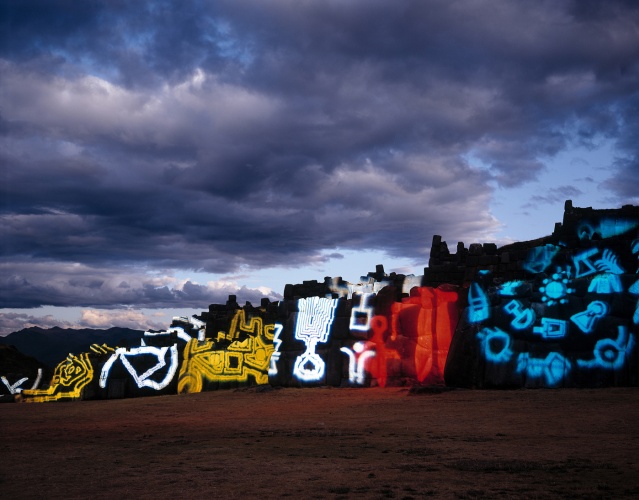
I chose to talk about Jorge Orta and his work with Light projection and public installation for my artist response. Jorge Orta has been creating very new and innovative installation art forms ever since the 1970s. Some of his earlier pieces dealt a lot with video and mail art where he expressed his feelings towards the military regime at that time. He learned early on that his true passion for art came in the form of installation art presented to widescale audiences. This comes in many different shapes and sizes, but my favorite had to be his work with light works projection (which is very similar to what we are working on in class). His most famous piece in this form would have to be The Imprints of the Andes in which he used light to inscribe a cool pictoral language on to the Andes mountains.

I just think that this is one of the coolest forms of expression. The color scheme works so well and does a really good job at protruding the pictoral language images. The aesthetic of the clouds really adds to the picture as well. SO COOL!

For this particular work, I could not find a quote for an artist statement, but from what I got, this piece had to deal with finding a cool and creative way to celebrate the 500th anniversary of the continent being formed. He wanted to find the mountains that could best represent continent for all of its glory.

I found a separate artist statement from Orta talking about how essential an audience is to his work. He states that “the individual creative potential of people needs to be fully acknowledged. By recognizing this potential and harnessing it through our work, we aim to mobilize an increasingly wide audience in actively supporting and providing solutions to world problems, whether they are ecological, political, humanitarian, or economic.”