Project 1 | Artist Statement + Documentation Video

From the day that I was assigned this project, to the day before I have to present, this project has changed quite a bit. The theme has kind of stayed the same, but it has evolved into something that I believe works decently well with how installation art is supposed to work. The whole idea for my project was to show how prime essentials in life, such as food and water, are taken for granted while other things like apps and online shopping are valued as more important to us. I emphasized this, by videotaping me wasting each prime essential and then projecting it onto the object accordingly. Hopefully, by seeing each item be wasted, it will allow the viewers to have a better grasp on the message this very message that I’m trying to convey.

I really liked how this project turned out and I think it really gave me a better idea on what exactly installation art is. Everyone sees a particular object differently and associates it with different meanings and I think by projecting onto an object, you are controlling, and somewhat changing, that association/perspective. In other words, you are giving another meaning objects and I really think that’s something that makes installation art so intriguing. I had a lot of fun using madmapper and projectors and am looking forward to the next project!
 

Project 1 | Process post 3

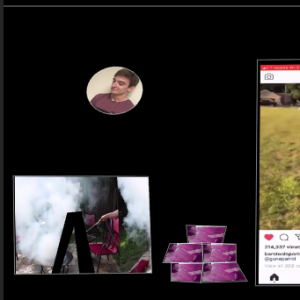
So for this process post, I went into the studio again, and finally set everything up. I decided for the main object to represent things we don’t need, but always want, as a giant iPhone screen. I went ahead and recorded my friend’s screen and went through different time wasting apps. In the setup, I have this in and in the middle of everything giving it the feeling like it’s the most important thing in our lives making other things, like our prime essentials, very overlooked.

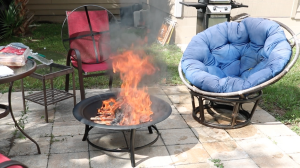
I also messed around with masking with my logs of wood. It definitely allowed me to make the logs of wood pop more.


Project 2 Proposal

Project 2 Proposal:

For my proposal for project 2, I decided to change it up and do something different from my first project. I think the whole idea of using video to tell a story different is really interesting and wanted to display a subject that was more important to me that hadn’t been covered yet in class. Around spring time of last year I made the big transition of my life to come out as gay. It was definitely a long process and it’s something that I truly struggled with for years. When I finally came out though, it was such a relief and I could and will not ever go back to that point in my life because of how happy I am with myself now. For this project, I want to use video and projection mapping to emulate this story and the feelings I was having the whole time I was in the closet in hopes to relay the same feelings on to the viewers watching my video.

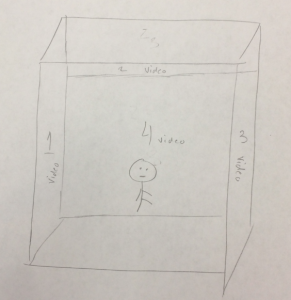
For the layout of my project, I came up with the idea to film and project everything in a small, enclosed, room. I don’t know exactly what that room is yet, but I was thinking either a bathroom or a walk in closet. I’ll then project my four videos on to each wall. The videos will be thoughts that I was having at the peak of my closeted mind. Including, thoughts about guys, thoughts about trying to like girls, what others would think,  and how I would be perceived. I’m thinking about putting the camera above me sort of like a bird’s eye view looking down at me and my struggles. Obviously, we don’t have the resources for me to use 4 projectors so, I’m going to have to try to work with what I have.To project onto four walls, I’m guessing that I’m going to have to use two projectors and put them in separate corners.

For the performance, I plan on showing myself going into the room and then being stuck in the room as projections start to appear on the walls. I wanna have a title screen then project on all four walls with a voice saying “who cares?” or “what’s the big deal?” something along the lines of that because it really reflects on the realization that I had right before I came out and made it easier for me to do so. And then I’ll show myself opening the door and “coming out” of the room and then when I close the door and leave, I want to project a pride flag onto the door as well.

For materials, the list is pretty simple. I think that I’ll only need the room that I’m projecting in and myself. I might update this list though with other materials as this project develops more.

Timeline:

  • FIND ROOM/ STUDIO
  • Record videos
  • Act out a script
  • Create videos in mad mapper
  • Rent out projectors
  • Practice performance


Sketches

Process Post # 2

My updates for my project for this week:

It only took 4 tries, but I finally got one of the damn projectors to work!

I also filmed the majority of my videos and edited them. I decided to add some glitch art transitions to them. I am currently working on the quadrant video, I just haven’t gotten all of the videos filmed yet.

The Function of the Studio | Response

For this week’s response, we were asked to read an article by Caitlin Jones that talks all about how the studio is starting to change forms from your standard, typical studio that focuses in on one environment, to one that is constantly dynamic. This has become more and more possible with the power of laptops and their ability to create virtually a mobile art studio.  I thought this was a very interesting and relevant read with the direction that art has recently been taking especially with online sharing sites like YouTube where creators can share their own life stories and the environment that they live in. Everything can be shared  and can be produced in different ways.

I found the whole discussion about the surf clubs, like Nasty Nets and Spirit Surfers, very interesting. These were the first real places where people of any art ability could post their work and it produced some very interesting results. If you really think about it, these sites were pioneers and paved the way for bigger “independent artist” sites like Deviantart and Tumblr. One interesting thing I noted though was that sometimes, when I would click on an image, videos would download automatically without my control. I didn’t open them because viruses, but just thought it was interesting.


Chapter 2 Response

This chapter seemed to further delve into the world of installation art and its many different forms. More specifically, the author talks a lot about the most important characteristics of Installation art and what distinguishes it from other forms. I really liked the idea that installation art should be interactive and that an interaction is really based on one’s environment and the person viewing it. It makes it unique and allows for everyone to have a different experience when viewing. I also thought the idea of space was really interesting. It was mentioned many times throughout the chapter along with the relationship to Minimalistic art. How much space that is between a viewer and the art being shown can really effect how someone perceives something.

The idea of size of an art implementation was cool too. How it can either engulf a viewer or make them feel more private and intimate. Overall, a decent chapter and it definitely helped me gain a better grasp on what Installation art has to offer.

Project 1 Update (Process 1)

For this first update, I thought that I would mention some key things as I move forward. I have decided to change the concept of it just a tad. Instead of boxes with items inside them, I thought might as well just project on to the objects themselves. I am still going with the idea of taking our prime essentials for granted while instead putting the things we don’t need, but desperately want as our top priority. As for the objects that I will be projecting on, I went out and bought the following:

Prime Essential Items That We Take For Granted

  • Toilet Paper
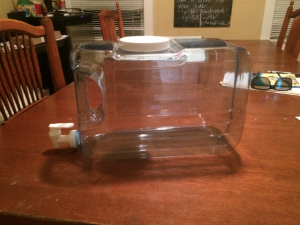
  • A Jug of Water

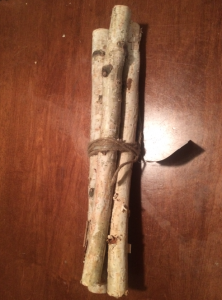
  • Some wood (representing a house and fire materials)

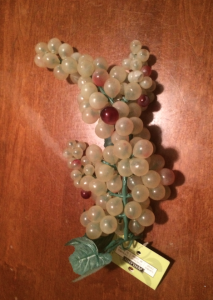
  • Grapes (representing food)

Then for the object that I will be looking at and trying so hard to get to will be a piece of glass (representing transparency) with a map of money falling down and other “wants” that we don’t really need. I am still coming up with the videos, and the concept for them, to project on each item. I am still debating on whether or not I want to project myself traveling through each item, or something else. I will have to keep brainstorming with this.


Hope this helps you get a better grasp of where my project is and how it’s coming along.

Artist Response | Jorge Orta

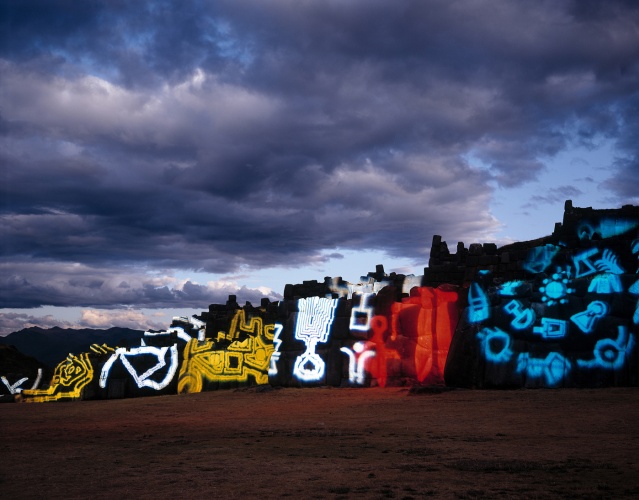
I chose to talk about Jorge Orta and his work with Light projection and public installation for my artist response. Jorge Orta has been creating very new and innovative installation art forms ever since the 1970s. Some of his earlier pieces dealt a lot with video and mail art where he expressed his feelings towards the military regime at that time. He learned early on that his true passion for art came in the form of installation art presented to widescale audiences. This comes in many different shapes and sizes, but my favorite had to be his work with light works projection (which is very similar to what we are working on in class). His most famous piece in this form would have to be The Imprints of the Andes in which he used light to inscribe a cool pictoral language on to the Andes mountains.

I just think that this is one of the coolest forms of expression. The color scheme works so well and does a really good job at protruding the pictoral language images. The aesthetic of the clouds really adds to the picture as well. SO COOL!

For this particular work, I could not find a quote for an artist statement, but from what I got, this piece had to deal with finding a cool and creative way to celebrate the 500th anniversary of the continent being formed. He wanted to find the mountains that could best represent continent for all of its glory.

I found a separate artist statement from Orta talking about how essential an audience is to his work. He states that “the individual creative potential of people needs to be fully acknowledged. By recognizing this potential and harnessing it through our work, we aim to mobilize an increasingly wide audience in actively supporting and providing solutions to world problems, whether they are ecological, political, humanitarian, or economic.”


Chapter 1 Response

So blackboard wasn’t working for me and I decided to write my response here. Chapter 1 of the installation textbook finally answered a lot of questions I had about the subject itself. After the first class, I still wasn’t really sure what this was all about, but now it makes a tad more sense. I think the whole idea of creating a scene out of materials that carry different associations is a very avant-garde way of conveying messages or stories and that’s what I find so interesting about this art form.

I found it interesting to see how installation art evolved into the form that it is today. Starting in the 1950s with Kabakov and his room full of different paintings; to the ’60s where artists started to use actual objects to convey meaning and messages that altered the typical associations that the viewer had for these particular objects; then to the 80’s where quality was masked by quantity and installation art filled huge exhibits to convey meaning. To now where digital images can be projected onto objects to kind of bring a whole new dimension to this dynamic art form. I also particularly liked the feminist movement dealing with installation art and how certain exhibits in the ’60s were decorated in tampons and used sanitary towels which ultimately gave a statement about the world and where a women’s role fell in it.


Project 1 Proposal

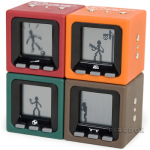
After our class discussion of the first project, I tried to jot down some ideas in my mind that I thought would best fit with what we were going to start doing in mad mapper. When we first projected an image onto that box last class, I immediately got the idea of Radica Cube World Blocks; a toy from at least a decade ago that I used to play with. Basically, they were mini blocks with a little animated stick figures inside of them. If you had two or more, you could combine them and watch as the stick figures interacted with each other through the boxes.

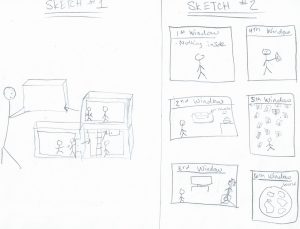
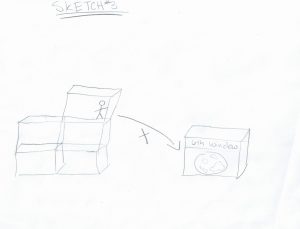
I thought it was a really cool concept that could translate well with what we are doing with mapping and decided to start brainstorming further with this idea. For my sketches, I mapped out a basic story line where a little video of myself would go through 4-5 boxes stacked up. 1-2 of them would be stacked up as the video progresses. Each box would have materialistic items inside and with each box, I would obtain more things. (i.e. guitar, couch, food, games, people, money, etc.). The final box would contain a video of the earth spinning around, but is not connected to the rest of the boxes therefor not obtainable by my character. No matter what I do to the box, I can’t break the wall to reach it, acting ultimately as a metaphor for greed and the idea that not everything is achievable no matter how bad someone wants it. Below are my sketches for this concept.

Timeline:

So I didn’t know what you meant by timeline, but I am going to take a guess and say you were talking about when and how everything will be put together. Here is what I have so far.

Saturday and Sunday (9/8,9/9): Start finding props and start filming

Monday, Tuesday (9/10/9/11): Design boxes in photoshop/illustrator and import them into madmapper

Wednesday, Thursday (9/12/9/13): Go into blackbox and try to set everything up and make any last minute changes.

Materials list:

  • 6 cardboard boxes
  • 5 different videos
  • Materials inside boxes
    • Couch
    • Food
    • Game oriented object (basketball, etc.)
    • People to be filmed
    • Money
  • Green screen
  • Blackbox