Artist Research # 3 | Thomas Hirschhorn

For this week’s artist research, I chose to cover Thomas Hirschhorn, a very interesting artist who has a lot of captivating and inspiring work. The majority of Hirschhorn’s work is very political (even though he doesn’t think it is) and covers a lot of world issues that our society faces every day. Hirschhorn was originally a graphic designer and that can definitely be seen in a lot of his work which incorporate a lot of collage type styles. He is a firm believer that everyone has an innate understanding of art.

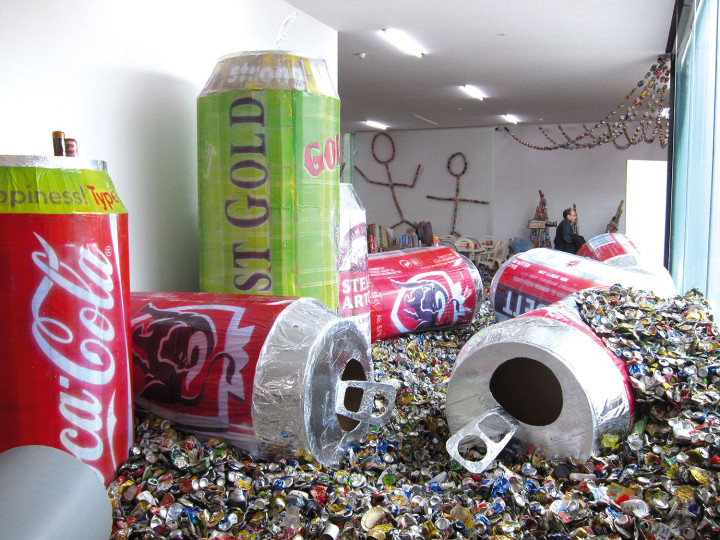
Picking one installation by this artist really was hard, but I had to go with the “Too Too-Much Much.” A piece dealing with our society’s lack of recycling. In this installation, viewers step into a house filled to the brim with soda cans. Individuals experiencing this installation must trudge through thousands of soda cans just to explore the house. I thought that this was such an impacting statement especially considering where our nation stands on the topic of recycling. I think it’s really easy to not think about the matter when it’s not staring you, or better yet engulfing you, constantly.


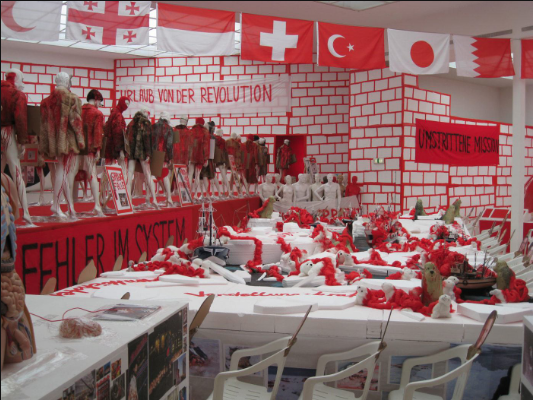
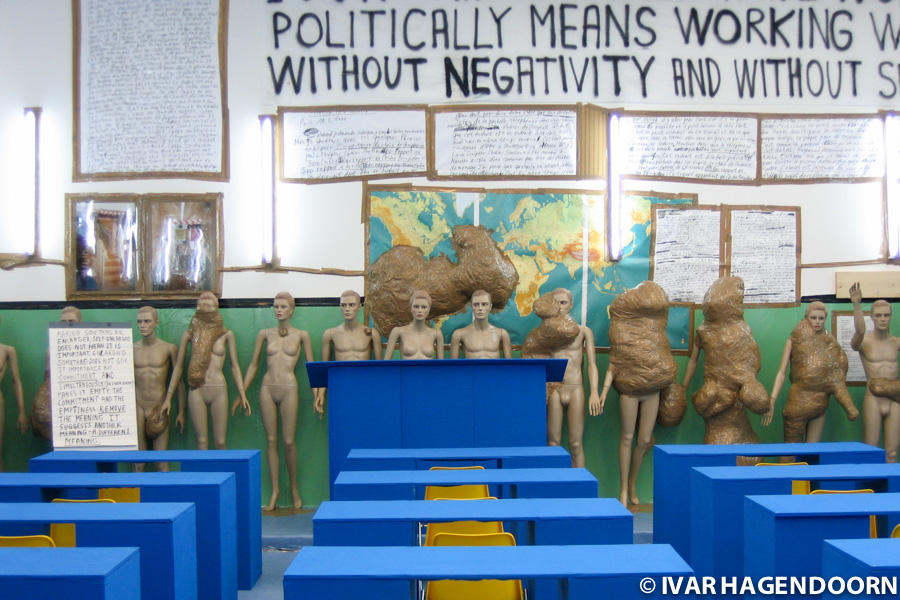
I thought I would include some pictures from other installations of Hirschhorn’s that I really liked.

Statement

Hirschhorn has many statements about his art, but I thought that this one below offered the most to his style of work.

“I don’t make political art. I work Politically. Working politically means working without cynicism. Without Negativity and without Self-Satisfaction.”


Project 3 Proposal | From the North

For this third project Gabi, Maxie-Lew and I decided that we wanted to emulate the season of fall as much as we possibly could. We’re going to be projecting on pumpkins, hay, lots of leaves, and possibly a sachet (if it’s allowed). To engage with the viewer’s senses other than sight, we’ll have a fan blowing to create common gusts of wind often felt during the autumn season and make the setting a little bit cooler, and apple cider to engage the sense of taste. We also want to have leaves scattered around to also engage the sense of touch. There’s some sort of fall/pumpkin fest going on in Hyde Park and most of our footage is going to be taken there as it’s the most accurate representation of the season as we can achieve in Florida. The videos filmed will include lots of fall images like hay bails and a pumpkin picking patch, and locals enjoying all the pre-made festivities. We also are going to try to get home movies from us durring the fall seaosn. I also wanted to contribute some of my old home footage from back in Virginia to add more to the whole installation.
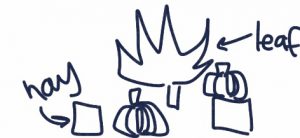
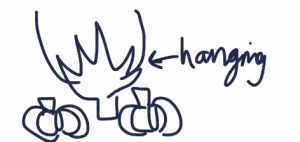
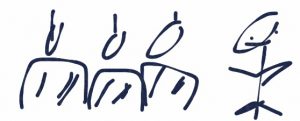
We wanted to go with the idea of encapsulating autumn as a whole for several reasons. The first is that the most popular state’s students from UT are from are New York, New Jersey, Pennsylvania, Illinois, and Connecticut (I work in admissions I promise this is verified). All of the listed states have all four seasons, something that the UT student body doesn’t get to fully experience here in Florida. Sure it gets a little colder as “winter” approaches, but it’s nothing compared to autumn up north. Floridians don’t get to experience the leaves changing colors and falling off the trees, riding on an actual trailer filled with hay bails out to a field to pick a pumpkin that will later be carved and displayed outside for Halloween, or warm apple cider and apple donuts as the temperature continues to drop but isn’t unbearable like winter. The smell and the actual feeling of fall is something that is so hard to replace, we wanted to try our best and bring it here. The second main reason we chose to focus on autumn is that all three of us are actually from up north and gave up fall when we chose to come to school down here. As much as we love Florida, we decided to get a little nostalgic and focus in on memories, feelings, and emotions from home.


Timeline:

10/26: Project Proposal Due

10/28: Film in Hyde Park

10/29: Edit

11/2: Practice Installation Set Up

11/3: Tweak Installation

11/8: Final Project Set Up

11/9: Project Due


Materials:

-Camera

-Pumpkins

-Hay

-Sachet

-Fake Leaves

-Fan

-Apple Cider

-Computer

-Hyde Park Festival

-Video Editing Software

-Copyright Free Music

-Large Room (for viewing and installing

Project 2 | Artist Statement + Documentation

I thought that this assignment was a very unique and clever way to get us to learn more about how installation art works. I think, while project 1 acted as more of a warmup round to understanding installation art, this project gave us a lot more possibilities and allowed us to explore our creative freedom a little deeper.

Because of this, I decided to revolve around a theme that was way more personal and meaningful then the last one and I’m glad I chose this route. For a while now, I have I wanted to focus a project around my coming out story, rather the few months leading up to before I came out., but just never had the right tools to do it justice until now. That was one of the things that I loved about this assignment was that it allowed us to tell a story from our own perspective in a very visual, straight-forward manner and I wanted to take advantage of that as much as possible.

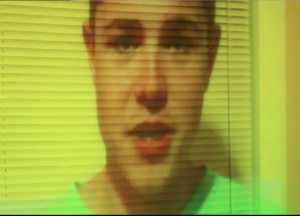
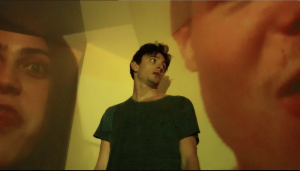
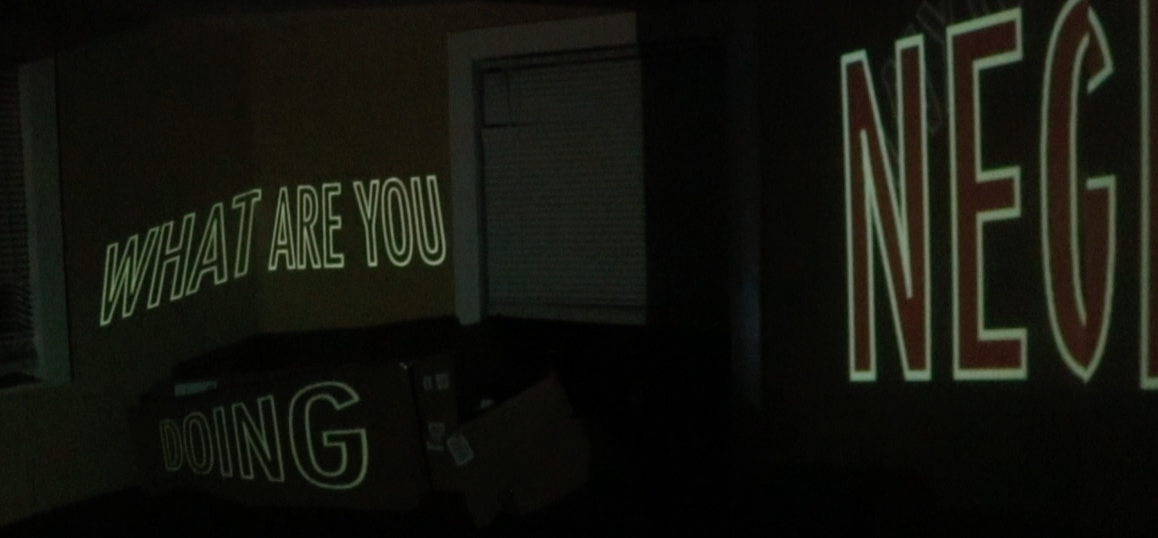
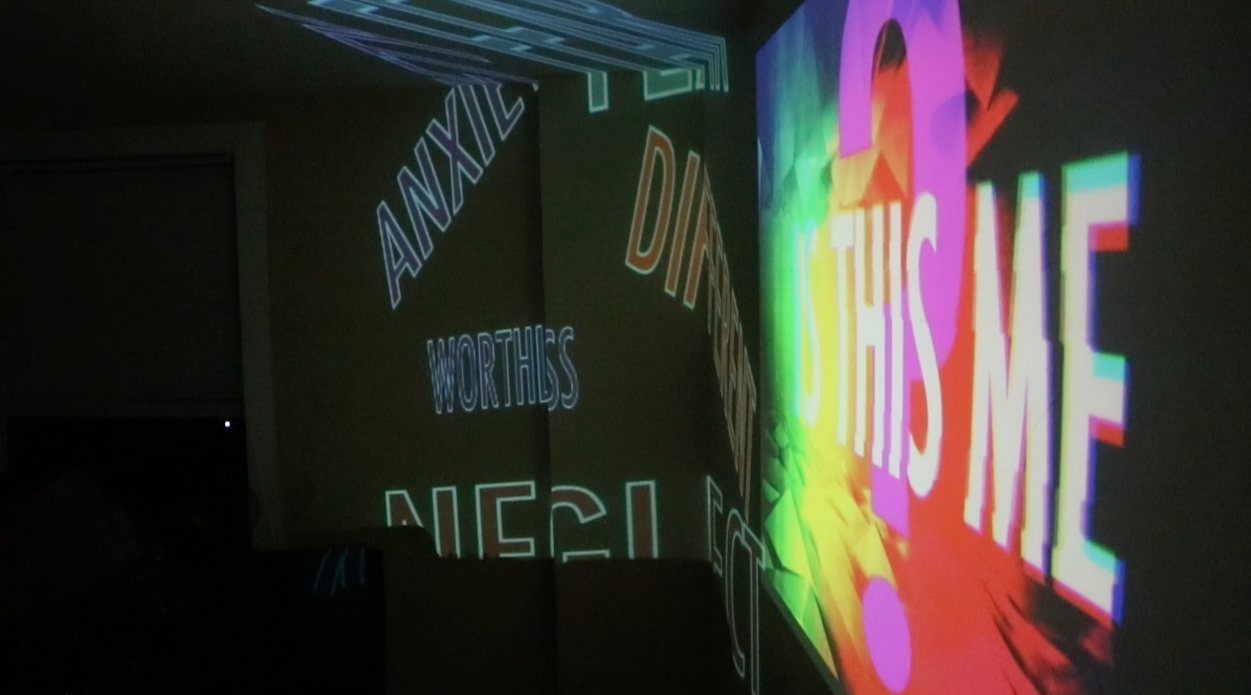
The outcome of this project turned out pretty much exactly how I wanted it to. One thing that was less of a bad turnout and more of a pleasant surprise was how over the top some of the scenes were. The background music (copyright free btw), the quotes delivered by my “actors”, along with my acting  were done so in a way that was very overly dramatic, but I think honestly did a good job at conveying the idea that I took a not so serious situation and made it feel like one. It’s really weird how much it seems like not a big deal after you come out, but beforehand, it’s a matter of life or death. It’s an aspect that I’m sure many individuals who have had similar coming out process can relate to and those who haven’t, can hopefully see it from this perspective.

Overall, I really enjoyed this project. It took forever, but I am very happy with the result.

Chapter 4 Reading Response

I found this chapter of Clair Bishop’s Installation art very interesting. The idea of incorporating social and political views into installation art is something that never really crossed my mind. I remember seeing it briefly while doing my first artist research of Jorge Orta where he expressed his feelings towards the political military regime at the time. But, other than that, I never really thought it was a big concept when talking about installation art until after reading this chapter. Now thinking about it, it really is such a good way to persuade a particular view to a wider audience. It’s a method that engulfs the viewer present in such a special way that the views being expressed honestly end up seeming subtle.

I found the whole discussion on The White Chapel art museum very interesting especially when thinking about all of the political statements and protests happening around the late 60’s. Helio Oiticica’s work with nests in works like Eden in this gallery, in particular, I found very cool. The way that he created environments that were so encapsulating and
“chill” to the viewer was really a unique and neat way to project political views.

Project 2 | Artist Research: Camille Utterback

For this next artist research, I decided to choose Camille Utterback and her brilliant work with interactive installation. Camille Utterback is an internationally acclaimed artist and is considered a pioneer of installation art. Utterback studied and maintained her BA at Williams College and earned her masters at Tisch School of the Arts in New York. Utterback’s work mainly focuses on connecting computational systems with human interaction in very visually appealing ways and has been featured in a multitude of art galleries and museums including the Smithsonian American Art Museum.

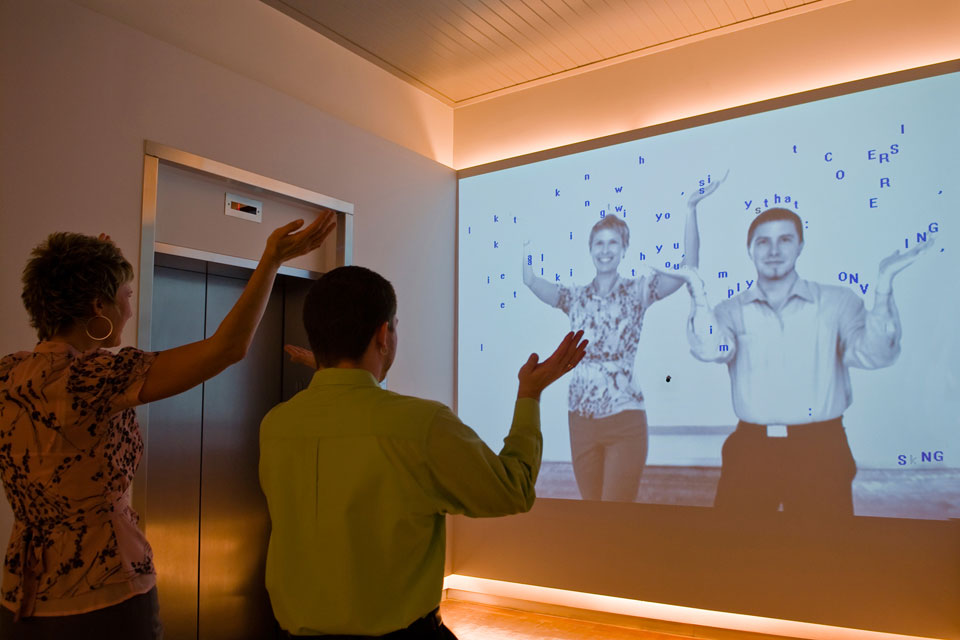
She has a lot of very cool projects, but the one that I found the most interest in was her “Text Rain” installation. In this installation, viewers are projected (in black and white) in front of a screen of falling text. The text is programmed to fall and land on objects that are darker then the screen so therefor end up falling on the person being projected. It creates a very cool and installation that is always different with each viewer being projected. I think when talking about installation art, interactivity plays (or should play) such a huge role. When thinking about all of the objectives that an art piece should achieve, I think one of the main ones would be how long a viewer stays on a piece. With something as interactive and unique as “Text Rain,” the user experience with it will almost always be a fascination resulting in each viewer to stay on the piece for a longer amount of time. I find this aspect of the art so intriguing.

Artist Statement:

Utterback’s statement is pretty long, so I’m just going to post an excerpt from it. The whole statement can be viewed here:

“My work is an attempt to bridge the conceptual and the corporeal. How we use our bodies to create abstract symbolic systems, and how these systems (language for example) have reverberations on our physical self is a matter of great concern to me. The dialog between these two realms is the subject of both my traditional and interactive work, and it is particularly relevant to our contemporary culture as we aim to grapple with the ramifications of virtuality and our increasing relationship with the interfaces and representational systems of our machines. ”


Chapter 3 Reading Response

I found this chapter pretty interesting. Out of the many topics covered, the ones I found the most interesting was the discussion on video installation. Bishop focuses a lot of her attention to the power of this form of installation and explains how it can encapsulate us. Especially, when in the right  environment. Bishop talks a lot about Robert Smith and his article, ‘A Cinematic Atopia’ which elaborates on the phenomenon of sitting down in a dark enclosed room and watching a film. The darkness separates us from reality and makes us look at nothing else, but the film itself. Our body becomes immobile and we really can’t do much more than look and listen to what is being displayed in front of us. It’s cool to think that something as basic and universal as a movie theatre could be called installation. Before reading, I would have never considered it one at all, but with all of the ways that it encapsulates us and makes us look at it in a certain perception is exactly what installation art is. I find the whole idea of public installation that isn’t really considered an installation art right off the bat until further analysis is really interesting.

I also thought the whole discussion about mirrors and their effect on our perception during an installation was also really cool. Piece’s like Richard Wilson’s 20:50 and Lucas Samaras’ Mirror Room really do a good job at distorting the viewer’s perception of reality and create incredible illusions of both the piece and one’s self image. It’s something that seems to be an objective of all installation art pieces.